
Knotless Braids vs. Box Braids: Which Is Right for You?
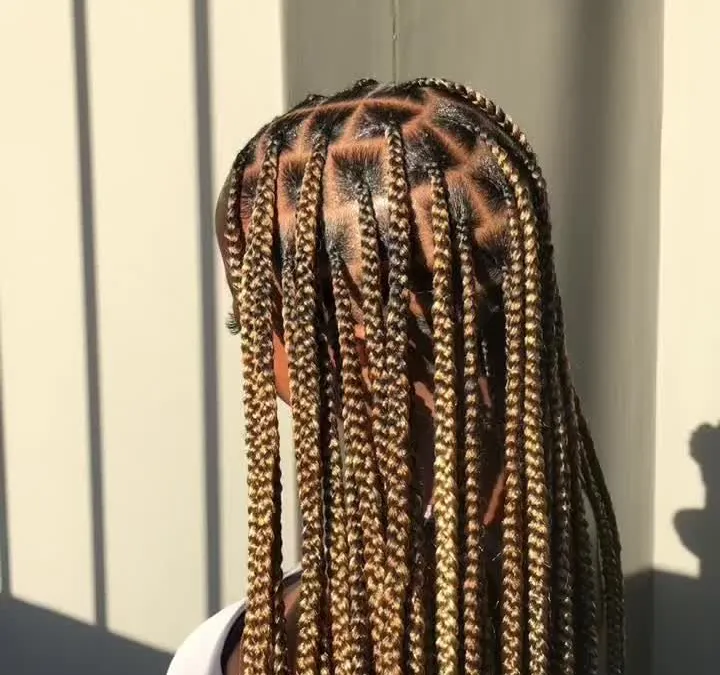
Both styles start the same way: sectioned, clean, natural hair. Where they split is in the very first step of the braid itself, and that one difference shapes almost everything else about how each style feels, costs, and holds up over the following weeks.
If you’ve been going back and forth on which one to book, this is the actual comparison, not just “they both look great.”
The technique makes the difference
Box braids start with a knot. Your braider ties your natural hair to the extension hair right at the root, then braids down from there. It’s a fast, reliable method, and it’s part of why box braids have been a go-to protective style for decades.
Knotless braids skip that knot. Your braider starts with just your natural hair and feeds in small pieces of extension hair gradually as they braid down, so the extension weight builds up slowly instead of getting anchored all at once at the root. That feed-in process is the entire idea behind the name, and it’s also why knotless braids take longer to install.
Comfort and scalp tension
This is where most people notice a difference right away. Because there’s no knot pulling at the root from the very first stitch, knotless braids usually feel lighter and less tender for the first day or two. Box braids can feel more tension right where the knot sits, especially with a very neat, tight part.
Neither style should ever actually hurt. Some tightness for a day or so is normal for both, but ongoing pain, throbbing, or bumps along your hairline means something needs to be adjusted, not something to wait out. If that happens, call your braider. A quick fix now is a lot better than dealing with sore edges for six weeks.
How long each one actually lasts
Both styles land in the same six to eight week range for most people, and the same rule applies to both: bigger braids grow out less noticeably and pull less on your scalp, while smaller braids look sharp longer but put more tension on your roots over that same stretch of time.
Box braids sometimes edge out knotless by holding their shape a little longer right at the root, because that starting knot keeps things locked in place. It’s the same trade-off as the comfort conversation: what makes box braids hold a little tighter is also what makes them feel a little tighter early on.
The price difference, and why it exists
At VidBraids, a regular knotless set runs $220 and a regular box braid set runs $200. That gap isn’t random pricing. Knotless braids take longer in the chair because the extension hair has to be fed in gradually, section by section, instead of tied on all at once. You’re paying for the extra technique and time, not a fancier version of the same braid. Larger sizes and longer lengths for both styles cost more for the same reason: more hair, more time. You can see the full breakdown on our pricing page.
What about how they look?
Side by side, a well-installed set of either style looks clean and full. The real visual difference shows up at the root. Knotless braids taper in more naturally where they meet your scalp, since there’s no knot creating a bump, which some people prefer for a softer, more natural-looking part. Box braids have a slightly more defined, uniform root because of that same knot. Both take color, beads, and length the same way, so if you’re choosing based on the finished style rather than the technique, either one will get you there.
Maintenance during the six to eight weeks
Day-to-day care is nearly identical for both styles: a light scalp rinse every one to two weeks, a satin or silk wrap at night, and moisturized ends a couple times a week. The one real difference shows up at the root as new growth comes in. Because box braids start with that knot, new growth can make the base of each braid feel slightly looser and more prone to slipping toward the end of the six to eight weeks. Knotless braids, without a knot to anchor against, tend to hold their shape more evenly all the way through, even as new growth appears. If you know you tend to push a style to the very end of its lifespan, that’s worth factoring in.
Which one is right for you
Go with knotless braids if:
- You want the least tension possible on your scalp and hairline
- You have a sensitive scalp or a history of tight braids causing soreness
- You like a softer, more natural-looking root and don’t mind paying a bit more for the extra install time
Go with box braids if:
- You want a classic, reliable style with a proven track record
- You’re working with a tighter budget for this appointment
- You like a very defined, neat part right at the root
Both are genuinely good protective styles when they’re installed with the right amount of tension and taken care of properly at home. The right one for you comes down to how your scalp handles tension, what you want to spend, and honestly, what look you’re after. If you’re still on the fence, tell your braider what you’re looking for and how your scalp usually handles braids. That’s the fastest way to land on the right call for your hair.
Not Sure Which One's Right for You?
Book with Trish and we'll figure out knotless or box braids together in the chair.
Book an Appointment