
Signs Your Braids Are Too Tight (And What to Do About It)
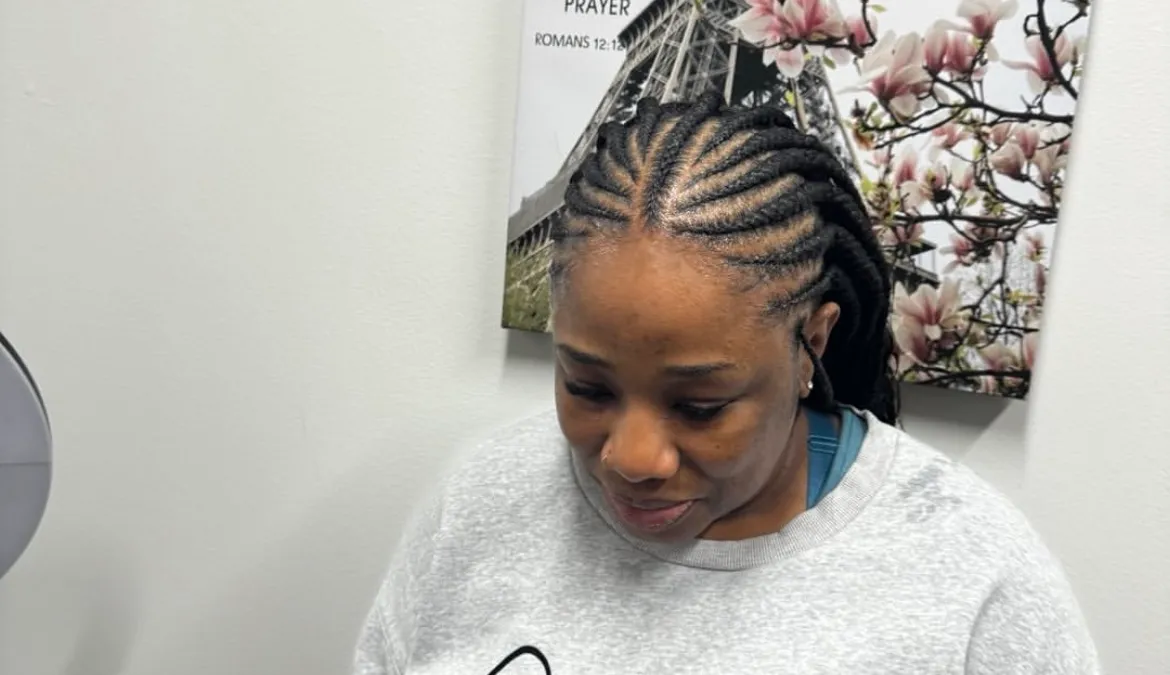
There’s a myth that tight braids last longer, so a little pain during the first few days is just the price of a good install. It’s not true, and it’s worth unlearning, because acting on that myth is how permanent hair loss happens.
Some tension is normal. Pain is not.
When braids go in, your scalp is going to feel something. Mild tenderness or tightness for a day, maybe two, is a completely normal response to new tension on your hairline. That’s different from pain, and the line between the two matters more than most people realize.
Normal tension fades on its own within a day or two and doesn’t get worse when you touch your scalp or move your head. A real problem doesn’t fade. It sticks around, and it often gets worse, not better, as the hours pass.
The warning signs to actually watch for
- Bumps along your hairline. Small, tender bumps where the braid meets your scalp, especially at your edges and temples, are a sign of too much tension right at that spot.
- A headache that starts at your part lines. If pressing on your part or edges brings on or worsens a headache, that’s your scalp telling you something, not a coincidence.
- Tenderness that doesn’t ease after a day or two. Mild soreness on day one is normal. The same soreness on day three or four is not.
- Red, irritated, or shiny-looking scalp. Skin that looks stretched, red, or unusually shiny along the braid lines means the tension is affecting the skin itself, not just the hair.
- Small white or flesh-colored bumps. These can be a sign of folliculitis, an irritation or infection at the hair follicle, which tight braiding makes more likely.
- Thinning or breakage right at the edges. This is the most serious sign. If your edges are visibly thinner or breaking specifically where the braids start, that area has been under sustained pulling.
Why tight braids are a mistake, not a feature
The idea that tight equals long-lasting mixes up two different things. A braid holds its shape because of the technique and the braider’s skill, not because your scalp is under constant strain. Tension that doesn’t let up is how traction alopecia starts: a type of hair loss caused by continuous pulling on the hair follicle. In its early stages, traction alopecia is reversible if the tension stops. Left alone for months or years, it can become permanent, especially along the hairline and edges, which are the areas most exposed to it in the first place.
In other words, tight braids don’t buy you a longer-lasting style. At best they buy you the same style with added risk. At worst, they cost you hair that doesn’t grow back.
Who should be extra cautious
Anyone can end up with braids that are too tight, but some hair and scalp conditions make it more likely to cause lasting damage, and worth extra caution around:
- Fine or thinning hair. Finer strands have less structural strength to begin with, so the same amount of tension that’s fine on thicker hair can cause breakage sooner.
- Postpartum hair. Hormonal shedding after pregnancy already weakens hair temporarily, so this is a good time to ask for a looser install and a smaller, gentler style.
- Chemically relaxed or color-treated hair. Both processes can weaken the hair shaft, which lowers the amount of tension it can safely handle.
- A history of tight braids or thinning edges. If this has happened before, it’s more likely to happen again in the same spot unless the tension is deliberately kept lighter there.
None of this means you can’t get braids. It means it’s worth mentioning to your braider up front so the install can be adjusted for your hair, not a generic standard.
What to do if your braids feel too tight
Don’t wait it out. If something feels wrong on day one or two, reach out before it turns into day five. Waiting doesn’t make tight spots resolve on their own, and the longer tension sits on one area, the more likely it is to cause real damage.
Be specific about where it hurts. “My whole head hurts” is harder to fix than “the front left section by my temple is pulling.” Point to the exact spot if you can, since it helps your braider figure out whether it’s one section that needs to be redone or something broader.
Know your options. Sometimes the fix is loosening or redoing a single problem section. Other times, if several areas are affected, a partial or full takedown is the safer call. Either way, get it addressed rather than pushing through six more weeks of discomfort.
Call your salon, don’t just tough it out at home. Pulling at your own braids to relieve tension usually makes things worse, not better. Let your braider assess it properly.
How to prevent it next time
- Say something during your consultation if you have a sensitive scalp, thin edges, or a history of tight braids
- Ask your braider to check in partway through the install, especially around your hairline
- Choose a braid size that matches your hair’s actual density; very small braids on fine or thin hair carry more risk
- Trust your own read on your scalp over the idea that discomfort now means a better style later
Braids should feel secure, not painful. If yours don’t feel right, that’s worth a call, not something to push through.
Braids Shouldn't Hurt. Let's Get It Right.
Book with Trish for tension that's snug, not painful, from the very first braid.
Book an Appointment