


Dreadlock Twists & Loc Maintenance
Whether you're just starting your loc journey or you've had locs for years, the approach stays the same for me. Protect the hair first, don't force the style onto it.
How I Care for Locs
I use lightweight techniques and skip the heavy products that end up weighing locs down or causing breakage right at the root. For maintenance, that means retwisting in a way that respects where your locs actually want to sit, not fighting your natural growth pattern. For starter locs, it means setting a foundation that holds up over time instead of needing constant rework a few months in.
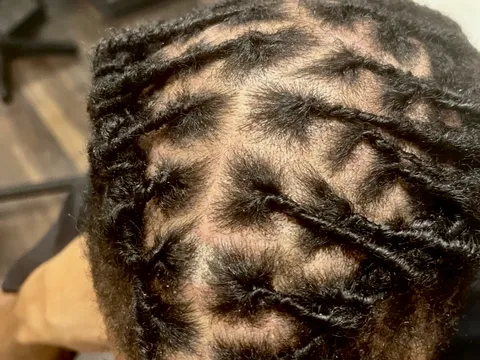
Keeping Your Locs Healthy Between Visits
- Keep your scalp moisturized, dry roots are where most breakage starts.
- Sleep with a satin cap or scarf to cut down on frizz and lint.
- Don't over-wash. Your locs need time to mature between cleanings.
- If a section feels thin or stressed, bring it up at your next visit instead of waiting for it to get worse.
Questions People Ask Me About Locs
How do I know if I'm ready to start locs?
If your hair's healthy and you're ready for the commitment, you're ready. We can talk through what your specific hair type needs before we start.
Will my locs still grow normally?
Yes. Done right, locing doesn't stop your hair's natural growth, it just changes the shape it grows into.
How often should I come in for a retwist?
It varies by how fast your roots grow out and how you're wearing your locs day to day. I'll give you a real timeline based on your hair, not a generic answer.
Can you fix locs that were started somewhere else?
In most cases, yes. Bring in what you've got and we'll look at it together before deciding the best way forward.
Ready for locs that grow the way they're supposed to?
Book with Trish for loc care that works with your hair's own growth pattern, not against it.
Book Dreadlock Twists